Make sure AI quotes your evidence
Your buyers ask ChatGPT and Claude which tool to use. The answer quotes whoever wrote the most specific page about your category, and that is often a competitor or a directory. Find the questions you are losing, then turn your benchmarks and docs into pages where every number traces to a source.
“The LLM will cite a source from a competitor”
A commenter on Hacker News[2]
When a developer asks an AI which tool to use, it builds the answer from pages it can quote: comparison posts, “best tools for” lists, pricing breakdowns. Most of those pages were written by a competitor, a pay-to-play directory or a content mill.
The company with the real benchmark loses the answer to the page with the most quotable claims, true or not.
WHY NOW. Developers now ask ChatGPT, Claude and their coding agents which tool to use. A thread on which tools Claude Code picks drew 611 points on Hacker News.[3] If your evidence is not on a page the engine can quote, it cannot be part of that answer.
How it works
See the questions you are losing.
You get the questions your buyers ask, asked to Claude with live web search (ChatGPT, Perplexity and Gemini next), with every source each answer quotes. You see which you win, which you lose, and the pages that win them instead.
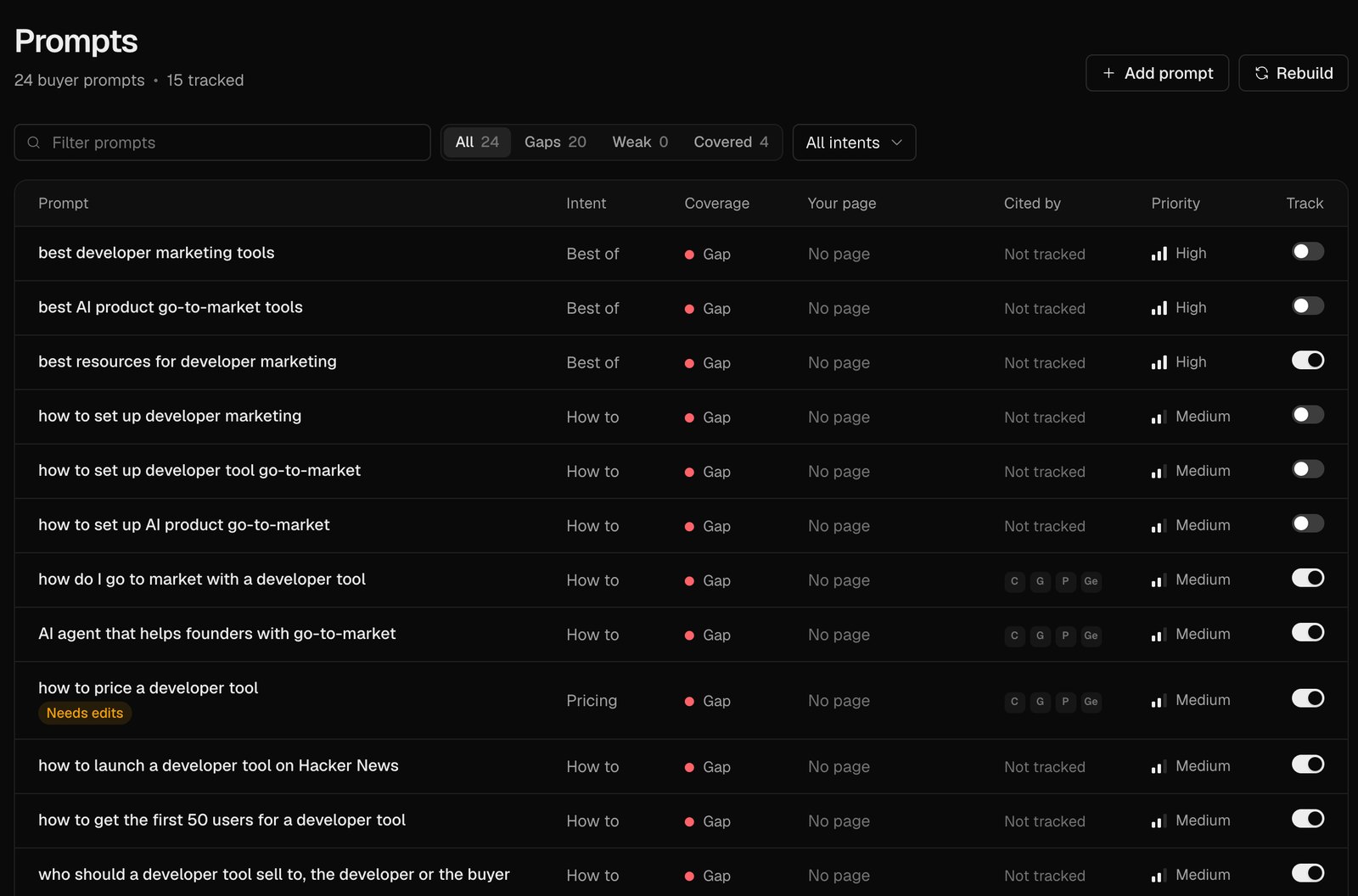
Turn your evidence into pages.
For each gap, you get a draft of the page that answers the question better, written from your facts (your benchmarks, your configs, your docs) after reading the pages that win today and the competitor’s own pricing and docs.
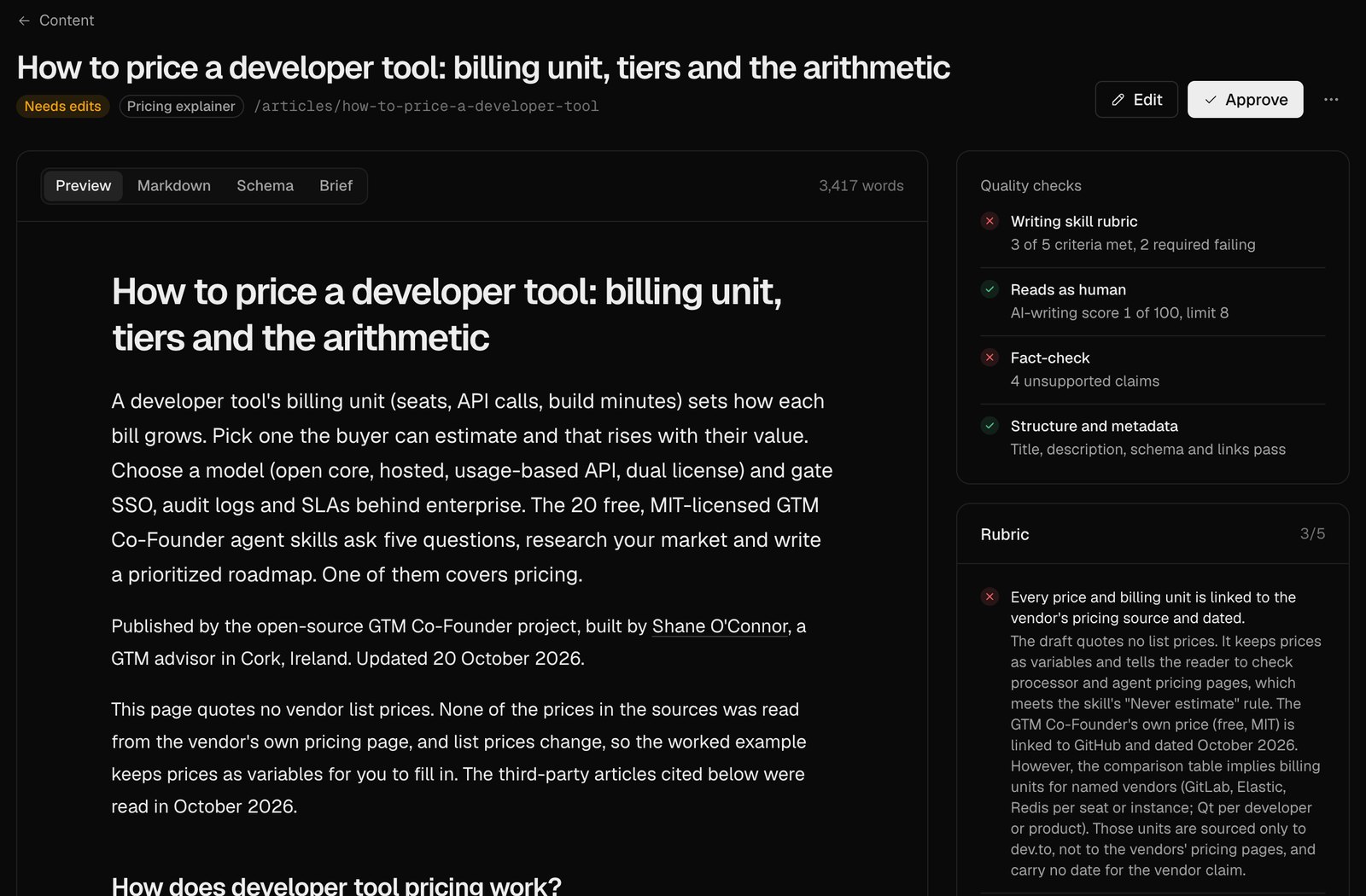
Nothing ships unchecked.
Every number must appear in your facts or a cited source. Every link must point at a real source or a real page on your site. A separate fact-check pass checks every claim against its source. You approve every page before it goes live.
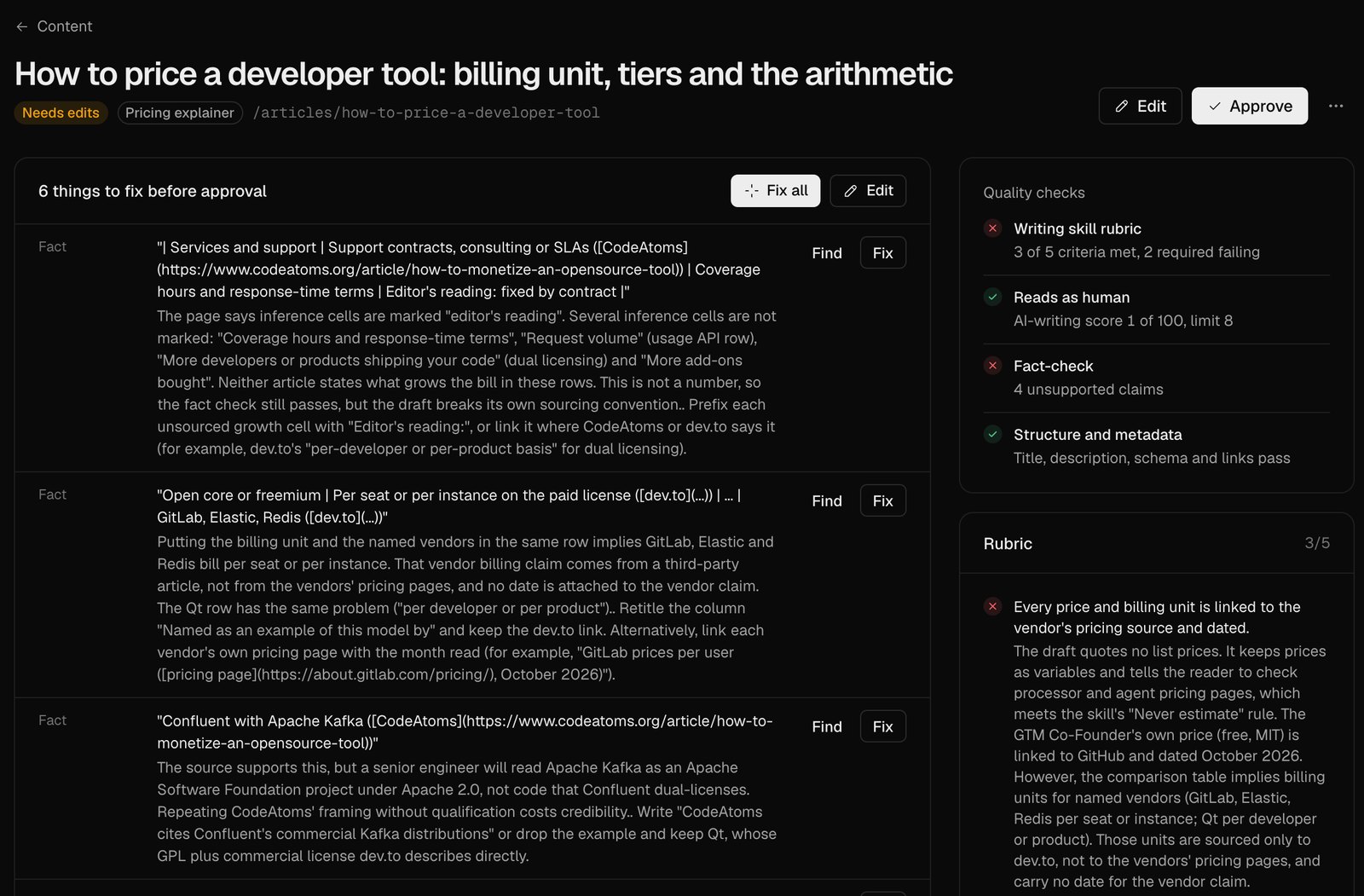
Anything it can’t trace gets flagged
Never published silently.
Two real flags from a pricing guide Citeplane drafted for gtmcofounder.com, our founder’s open-source project.[4] On 20 October 2026 the guide was still marked “needs edits”.
┌────────────────────────┬────────────────────────────────┬──────────────────────────┐
│ MODEL                  │ BILLING UNIT                   │ NAMED EXAMPLES           │
├────────────────────────┼────────────────────────────────┼──────────────────────────┤
│ Open core or freemium  │ Per seat or per instance       │ GitLab, Elastic, Redis   │
└────────────────────────┴────────────────────────────────┴──────────────────────────┘
┌────────────────────────────┐
│ MODEL                      │
│ Open core or freemium      │
├────────────────────────────┤
│ BILLING UNIT               │
│ Per seat or per instance   │
├────────────────────────────┤
│ NAMED EXAMPLES             │
│ GitLab, Elastic, Redis     │
└────────────────────────────┘
They have limits. They do not implement billing, meter usage or set prices for you, and they do not cover SEO tactics, ad operations or copy polishing.
- TRACED. Numbers come from your facts or a source the reader can click. Claims about competitors link to the competitor’s own pages.
- CHECKED TWICE. Automated checks for numbers, links and benchmarks, then a separate fact-check pass. Each problem comes back with a fix you can apply in one click.
- APPROVED BY YOU. Nothing goes live until a person on your team has read it and approved it.
Rates
10 buyer questions asked live to Claude, who it quotes instead of you, and whether AI can read your site: robots.txt, llms.txt, homepage text, structured data.
Print my report ▸50 buyer questions tracked, a full audit of your site and a plan, and 3 finished pages for your biggest gaps.
Start a pilot ▸Weekly tracking of your buyer questions, finished pages every month, and unlimited fixes and rechecks on your pages.
See pricing ▸Developer-tool, data and AI companies with something real to say: a benchmark, a production setup, a migration path, an architecture decision.
Consumer brands, e-commerce, local businesses, content by the article count.