Blog · 22 October 2026 · Shane O’Connor
AI quotes specifics. Whether they’re true is on you.
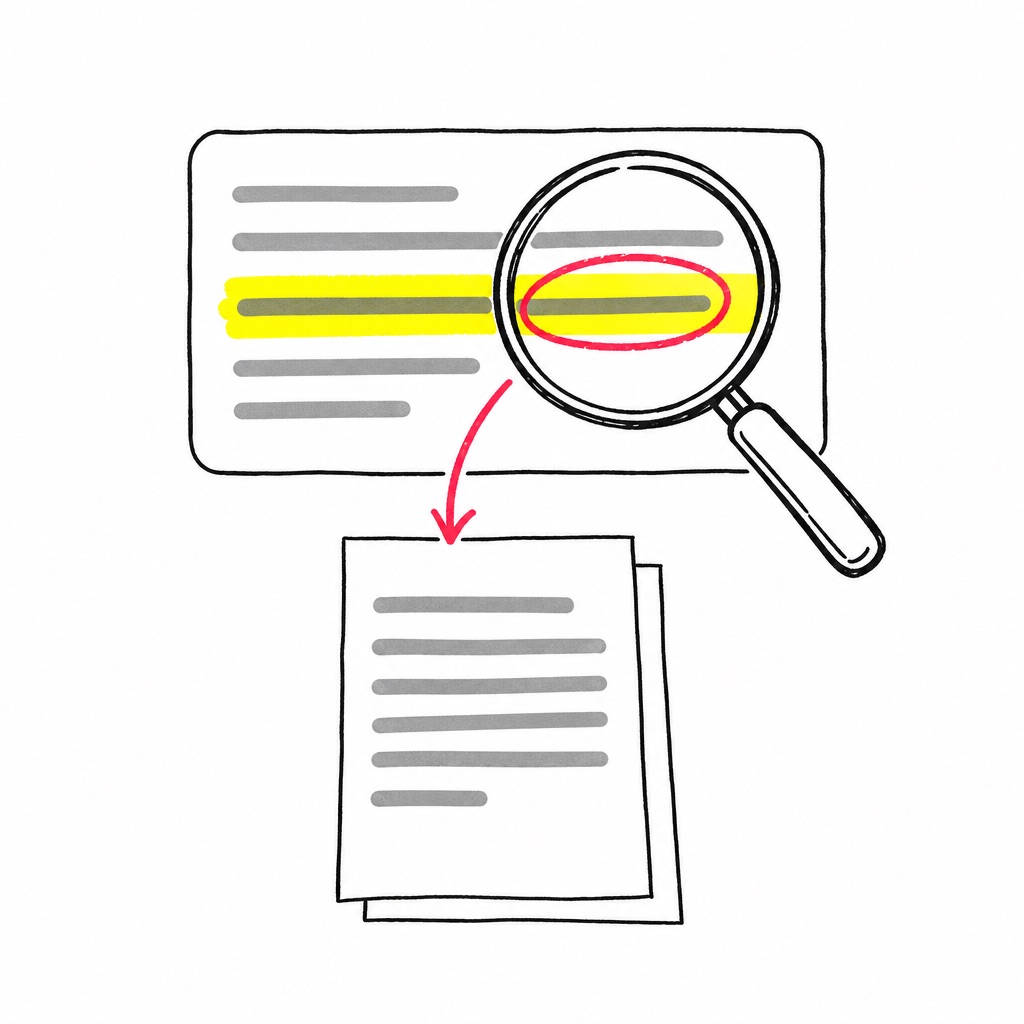
Getting your page into an AI answer is half the job. The other half starts when an engineer clicks the citation and reads what you wrote. If it doesn’t hold up, the citation cost you more than it won.
What gets you quoted
Engines reward pages that look like evidence.
- Specifics get picked up.Researchers rewrote web pages in different ways and measured how visible they became in AI answers. Adding statistics, quotations and citations raised visibility by up to 40% on their benchmark, and by up to 37% on Perplexity. The effect varied by subject.[1]
- The engine passes them on.When Claude answered “best Postman alternative”, three of the five pages it cited were vendors’ comparison pages, and it repeated what they said.[2] Answer engines search, pull passages from the pages they find and build the answer from them.
- So the incentive is clear.Put numbers, sources and direct claims on the page and you are more likely to be the passage that gets lifted. The research measured the form of the evidence. It did not test whether the claims were true.
Then a person reads it
The engineer who clicks through checks.
- Developers don’t take AI’s word for it.In the 2025 Stack Overflow Developer Survey, 46% of developers said they distrust the accuracy of AI tools, 33% said they trust it, and 3% said they highly trust it. The top frustration, for 66%, was answers that are “almost right, but not quite”.[3]
- They still go to a person.75.3% said that even in a future with advanced AI, they would ask a person when they don’t trust an AI’s answer.[3] When that person is your page, it has to answer like one.
- One wrong number undoes the citation.A benchmark without conditions, a price that is out of date, a feature the competitor shipped last quarter. A skeptical engineer finds it in a minute, and the page that brought them in becomes the reason they leave. On a comparison page it can also become a screenshot.
Yes, some people just follow the agent
For small choices. Not for anything that matters.
Some developers will install whatever their coding agent suggests for a quick script. For anything that touches production, a budget or a security review, someone reads the docs, the pricing and the comparison before saying yes. The agent brings them to your page. The page has to convince them. Write for that reader, not for the agent alone.
Striking the balance
Quotable and true.
- Lead with the claim, and its conditions.For example, “3x faster on 10M-row Postgres replication, measured on this hardware” gets quoted and survives the click. “Blazing fast” does neither.
- Every number traces to something.A benchmark you published, your docs, your pricing page, a named source. If you can’t point to it, cut it.
- Competitor claims cite the competitor.Link their own pricing or docs, dated. It is fairer, and it is the version an engineer will check anyway.
- Say when you are not the right pick.An honest section on when the alternative is better tells an engineer the rest of the page was written to inform, not to sell.
- Show the real thing.The config, the command, the limit you hit in production. Specifics from someone who has run it are the quotable kind and the trustworthy kind at once.
- Date it and keep it current.A dated page tells the reader how fresh the numbers are, and tells you when to recheck them.
How we handle it
This is the reason Citeplane traces every number on a page to the client’s facts, a source or their own engineer, cites competitors from their own pages, and sends anything it can’t trace back for a person to fix. AI decides whether you get quoted. Whether the page holds up when someone reads it is the part you control.
Questions
The short answers.
Do AI answer engines check whether a claim is true?
The research we cite measured what makes pages visible, not whether engines verify claims. It found that pages with statistics, quotations and citations become more visible in AI answers: up to 40% on a research benchmark and up to 37% on Perplexity. When Claude was asked “best Postman alternative”, three of the five pages it cited were vendors’ comparison pages, repeated as written.
If AI gets me cited, why does accuracy matter?
Because a person reads the page next. In the 2025 Stack Overflow Developer Survey, 46% of developers said they distrust the accuracy of AI tools and 3% said they highly trust it. Technical buyers click through and check, and one wrong number on a comparison page costs more than the citation won.
Won’t some people just do what their AI agent tells them?
Some will, for small choices. For anything that touches production or a budget, someone still reads the docs, the pricing page and the comparison. Write for that person: the agent brought them, the page has to convince them.
What should a page have so it is both quoted and trusted?
A specific claim near the top with its conditions and source, numbers that trace to a benchmark or doc, claims about competitors linked to their own pages, an honest section on when an alternative is better, real configuration or commands, and a date.
Would your pages survive the click?
The free AEO audit scores your pages for how well AI can read and quote them, and sends a roadmap that puts the fixes in order.